


“What we find in the archive is ourselves.”
- We Are What We Keep: The “Family Archive” by Woodham et al. (2017)
FAMILY HISTORY & ANCESTRY
Archives connect the past to the present and play a central role in shaping identity. Family archives reveal how personal stories exist within broader cultural narratives. When private family collections intersect with public institutions, individuals are better supported in preserving their histories, and communities gain stronger representation and voice.
Through the process of preserving my family materials and contextualizing them for placemaking, I gained a deeper understanding of my family history and its relationship to place, memory, and cultural continuity.
Visualizing my data
My biggest takeaway from working with my family archive is a deeper understanding of where I come from. The process helped me humanize my parents and those who came before them, while also gaining a clearer understanding of the history of my ethnicity. When names and events are connected to real people and lived experiences, they become easier to relate to, and we are more likely to care.
Through documents, photographs, and family stories, I was able to closely examine materials, trace when and where items originated, and follow my family’s immigration over time.
Map created using Google My Maps. Google, https://www.google.com/mymaps
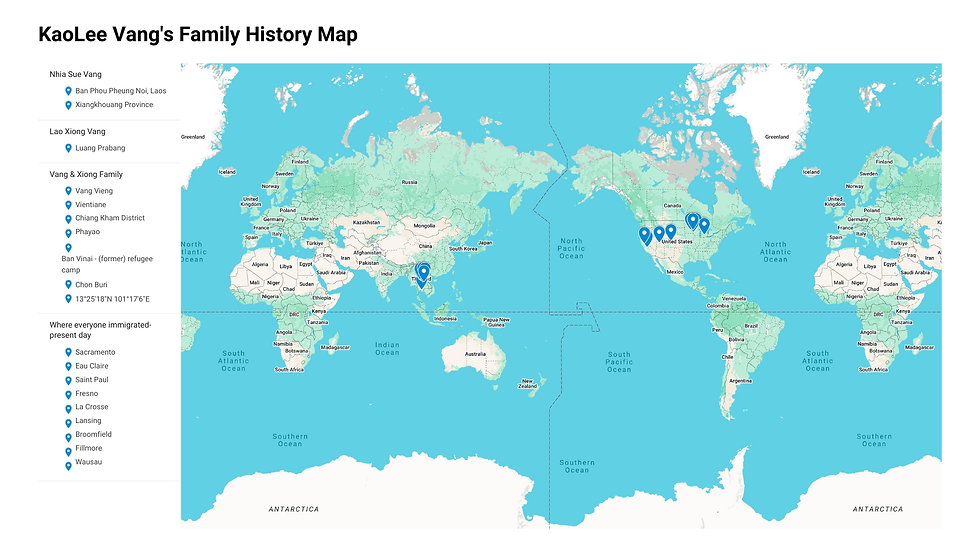


Building context from documents and images helps you make sense of where you come from. My Family History Map was one way to visualize where my family had been — and where we all ended up over time.
I encourage you to sit with the records that seem overwhelming or boring at first glance. Spending time with physical documents lets you cross-reference other records you've encountered, as well as the oral stories you've heard, to build a clearer timeline.
The medical record shown here is my own, from when I was an infant. Growing up, I heard different versions of how I had been sick as a baby, but I never understood the severity until I learned it was pneumonia — at just six days old. This document confirmed it, along with the timeline and locations of where my family was at the time, all of which were added to the Vang Family History Map.
Looking through other documents and photographs, while recalling stories I heard growing up, helped depict what everyday life in refugee camps looked like — and deepened my understanding of the immigration process, of who my parents were as young people. It humanized them.


